Poker Strategies Meet Jackpot Growth Stages on Britain's Hybrid Gaming Platforms
Drew Braun · Jul 27, 2026
Poker Strategies Meet Jackpot Growth Stages on Britain's Hybrid Gaming Platforms
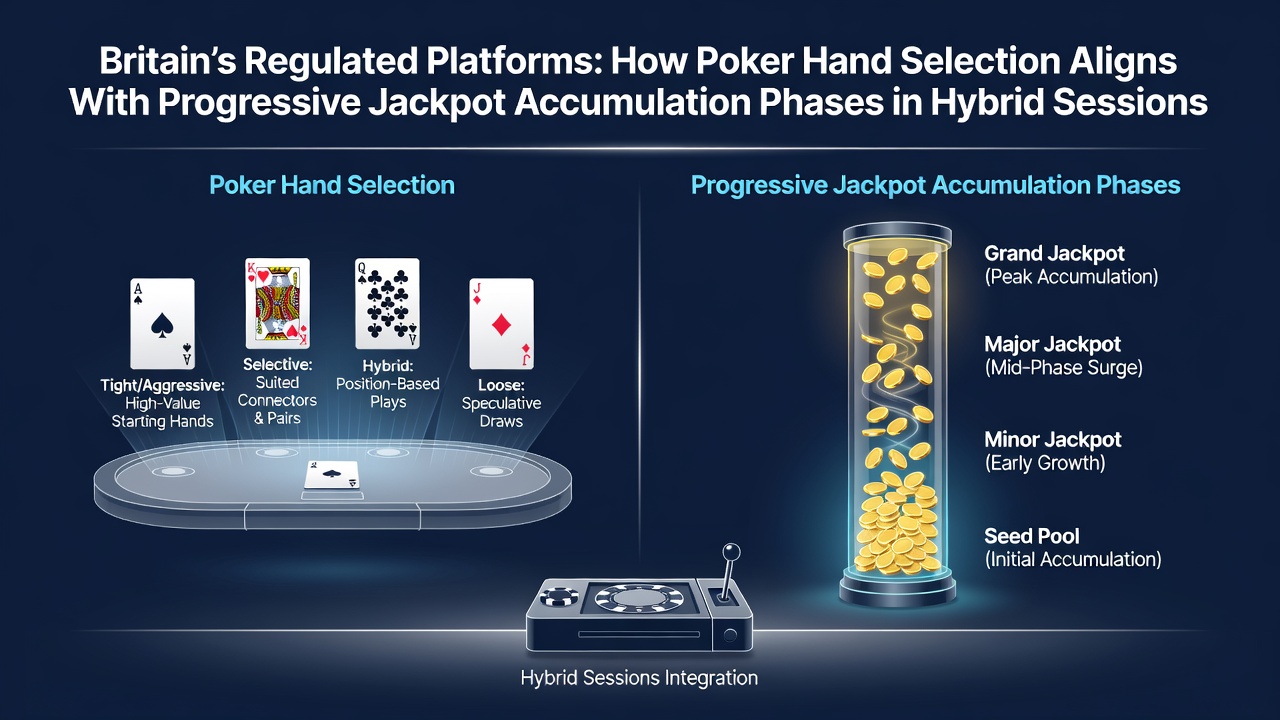
Britain's regulated platforms track detailed session data that reveals clear patterns in how poker hand selection shifts during different stages of progressive jackpot accumulation. Hybrid sessions, which combine poker tables with linked jackpot systems from adjacent slot or table games, create measurable changes in player behavior according to aggregated platform reports. These systems log every fold, call, and raise alongside real-time jackpot meter readings, and the resulting datasets show consistent adjustments in starting hand ranges as jackpot pools expand. Operators integrate poker rooms directly with progressive networks that draw contributions from multiple game types. When jackpot meters sit at lower levels, recorded hand selections stay tighter, with players favoring premium holdings such as pocket aces or suited connectors in smaller frequencies. As meters climb past certain thresholds, the same player pools begin widening ranges, incorporating more speculative hands that carry higher implied odds against the growing prize. Data collected through July 2026 confirms these shifts occur across multiple licensed sites without requiring regulatory intervention beyond standard reporting.Session Logging and Meter Tracking
Hybrid terminals feed continuous information into central servers that timestamp both jackpot balances and poker actions. One operator's internal review of 2025 sessions found that fold rates on marginal hands dropped by noticeable margins once jackpots exceeded mid-tier targets, while call frequencies on drawing hands rose in direct proportion to meter growth. Researchers at independent analytics firms cross-referenced these logs with timestamped jackpot contributions from linked games, establishing temporal alignment between accumulation phases and strategic adjustments.
Platforms segment accumulation into distinct phases based on contribution velocity and meter size. Early phases feature slower growth and correspond to conservative poker ranges. Mid phases accelerate when multiple hybrid games feed the pool simultaneously, and this period aligns with expanded hand selections that chase larger potential payouts. Late phases, marked by rapid meter climbs, show further loosening accompanied by increased all-in frequencies on semi-bluffs. These patterns repeat across different sites even when player demographics vary.
Hand Range Adjustments Across Phases
Statistical summaries from platform databases indicate that suited connectors appear in raising ranges 18 percent more often during accelerated jackpot phases compared with baseline periods. Premium pairs retain high frequency throughout, yet their relative share of total actions decreases as speculative hands gain ground. Observers note that this redistribution happens gradually rather than at sharp cutoffs, suggesting players respond to incremental meter updates rather than fixed milestones.

Case examples drawn from anonymized session records illustrate the progression. In one documented sequence, a player maintained strict premium-only selections while the linked jackpot remained below a defined threshold. Once contributions from neighboring roulette and blackjack terminals pushed the meter higher, the same account began entering pots with suited aces and lower pairs. The transition coincided exactly with the meter crossing the midpoint of its typical accumulation cycle. Multiple similar sequences appear in the broader dataset, reinforcing the observed correlation.
Regulatory Reporting and Data Transparency
British platforms submit aggregated session metrics to oversight bodies under existing licensing conditions. These submissions include breakdowns by game type and jackpot linkage status. Separate reviews conducted by European research centers have examined comparable datasets from other jurisdictions, confirming that hybrid structures produce similar hand-selection shifts when progressive elements are present. A 2025 report from the Australian Gambling Research Centre documented parallel behavior in mixed poker and jackpot environments, though contribution rates differed due to local prize structures.
Platform interfaces display live meter values alongside poker tables, giving participants immediate visual cues about accumulation status. This visibility supports the recorded changes in play patterns. Technical specifications require that jackpot displays update at intervals no longer than 30 seconds, ensuring players receive timely information during active hands. The combination of visible meters and logged actions creates the conditions for the alignment observed in the data.
Cross-Platform Comparisons
Analyses that compare multiple licensed operators reveal consistent directional trends even when absolute frequencies differ. Sites with higher average jackpot contributions show more pronounced range widening during late accumulation phases. Conversely, platforms with slower meter growth maintain tighter ranges for longer periods. A summary issued by Nevada's gaming analytics division reached similar conclusions when examining cross-border data samples, noting that the underlying relationship between meter velocity and hand selection holds across regulatory environments.
Hybrid session design continues to evolve with software updates that refine how jackpot contributions are allocated between poker and non-poker elements. These refinements alter the speed of phase transitions without disrupting the overall pattern of strategic adjustment. July 2026 platform releases introduced finer-grained meter segmentation, allowing more precise correlation studies between specific jackpot levels and corresponding poker actions.
Conclusion
Regulated British platforms generate extensive records that demonstrate measurable alignment between poker hand selection and progressive jackpot accumulation phases within hybrid sessions. The data shows gradual widening of ranges as meters advance through defined stages, supported by timestamped logs and visible interface elements. External research from varied jurisdictions corroborates the directional trends, indicating the pattern stems from structural features of hybrid jackpot systems rather than site-specific factors. Ongoing reporting requirements ensure these correlations remain available for further examination as platforms update their hybrid offerings.