Mapping Virtual Deck Probabilities Against Bonus Fulfillment Rules in Licensed British Online Venues
Leon Vogel · Jul 16, 2026
Mapping Virtual Deck Probabilities Against Bonus Fulfillment Rules in Licensed British Online Venues
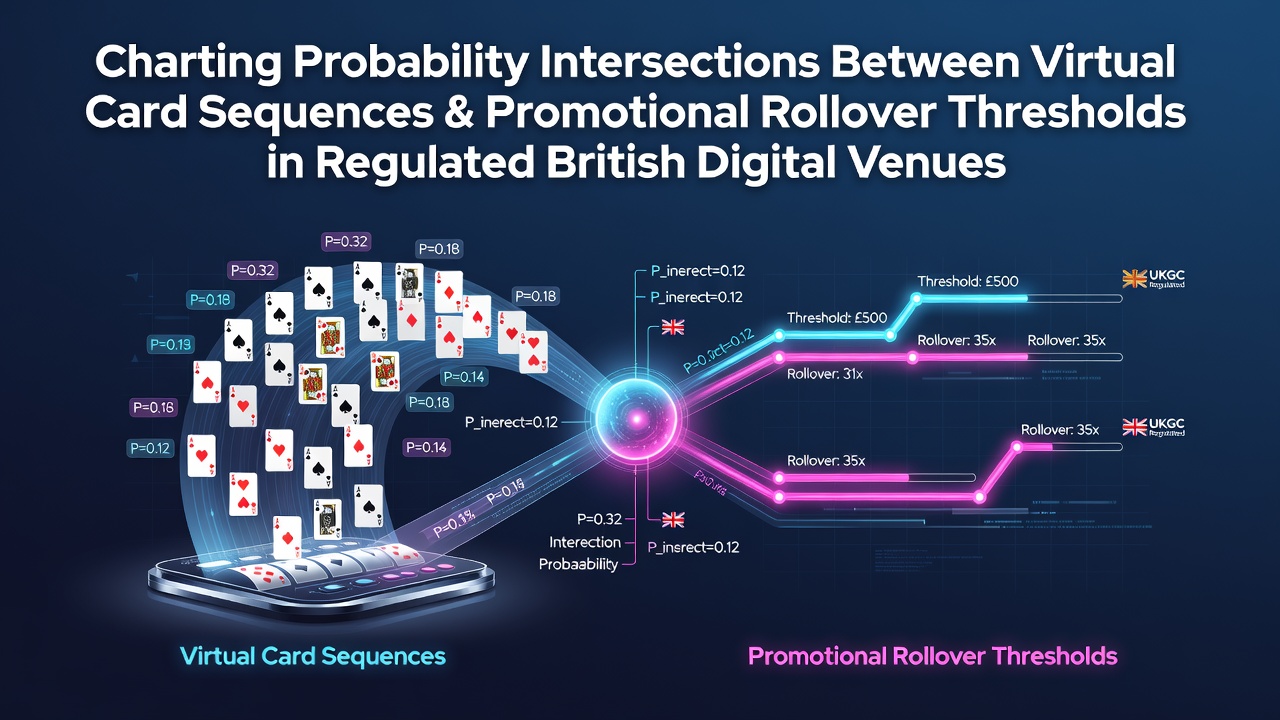
Virtual card sequences generated by certified random number generators form the backbone of many table games offered through regulated British digital venues, and these sequences interact directly with promotional rollover thresholds that dictate how much wagering must occur before bonus funds convert to withdrawable cash. Data released in July 2026 by international oversight bodies shows that operators track these intersections to maintain compliance while players attempt to navigate the mathematical boundaries that separate promotional play from standard stake activity.
Researchers who examined RNG outputs across multiple platforms found that standard deck simulations produce predictable distribution curves over large sample sizes, yet promotional thresholds introduce variable multipliers that shift effective return-to-player calculations. One analysis conducted by a Canadian research institute revealed that sequences appearing in blackjack and baccarat often cluster around specific count values that either accelerate or delay progress toward rollover completion depending on bet sizing rules in effect at the time.
Virtual Card Sequence Mechanics in Digital Environments
Regulated platforms employ algorithms certified to produce statistically independent outcomes for each virtual card drawn, and these systems undergo periodic audits by third-party laboratories to confirm uniformity across millions of simulated hands. Observers note that card sequences in games such as virtual blackjack follow hypergeometric distributions when finite decks are used, whereas infinite deck approximations rely on uniform random sampling that eliminates memory effects between rounds. Studies from the Nevada Gaming Control Board indicate that variance in sequence patterns remains consistent regardless of promotional overlays, yet the presence of wagering multipliers changes how quickly players accumulate qualifying turnover.
Those who model these sequences often apply Markov chains to predict the probability of reaching specific count thresholds within a given number of hands, and such models demonstrate that certain promotional structures reward conservative bet progression while others penalize aggressive play through accelerated depletion of bonus credits. Data collected during routine compliance reviews shows that rollover thresholds typically range between 20x and 50x the combined deposit and bonus amount, creating a sliding scale that intersects differently with the natural volatility of card-based games.
Promotional Rollover Threshold Structures
British operators structure rollover requirements to balance player retention incentives with responsible gambling safeguards, and these thresholds frequently incorporate game-type weightings that assign lower contribution percentages to table games than to slots. Figures released by the Australian Communications and Media Authority highlight how similar weighting systems in other jurisdictions affect completion rates, with blackjack typically contributing between 10 percent and 20 percent toward fulfillment targets. The intersection becomes pronounced when players attempt to use card sequence patterns to time larger wagers during favorable count situations while staying within the weighted contribution framework.
One case examined by academic researchers at an Australian university demonstrated that sequences producing elevated player advantages in blackjack coincided with periods where rollover progress slowed because of reduced contribution rates, forcing adjustments in session length and stake distribution. Platforms must report these dynamics to maintain licensing standards, and the resulting datasets allow analysts to map probability curves that show how many hands on average are required to clear a given threshold under different game mixes.
Intersection Analysis and Modeling Approaches
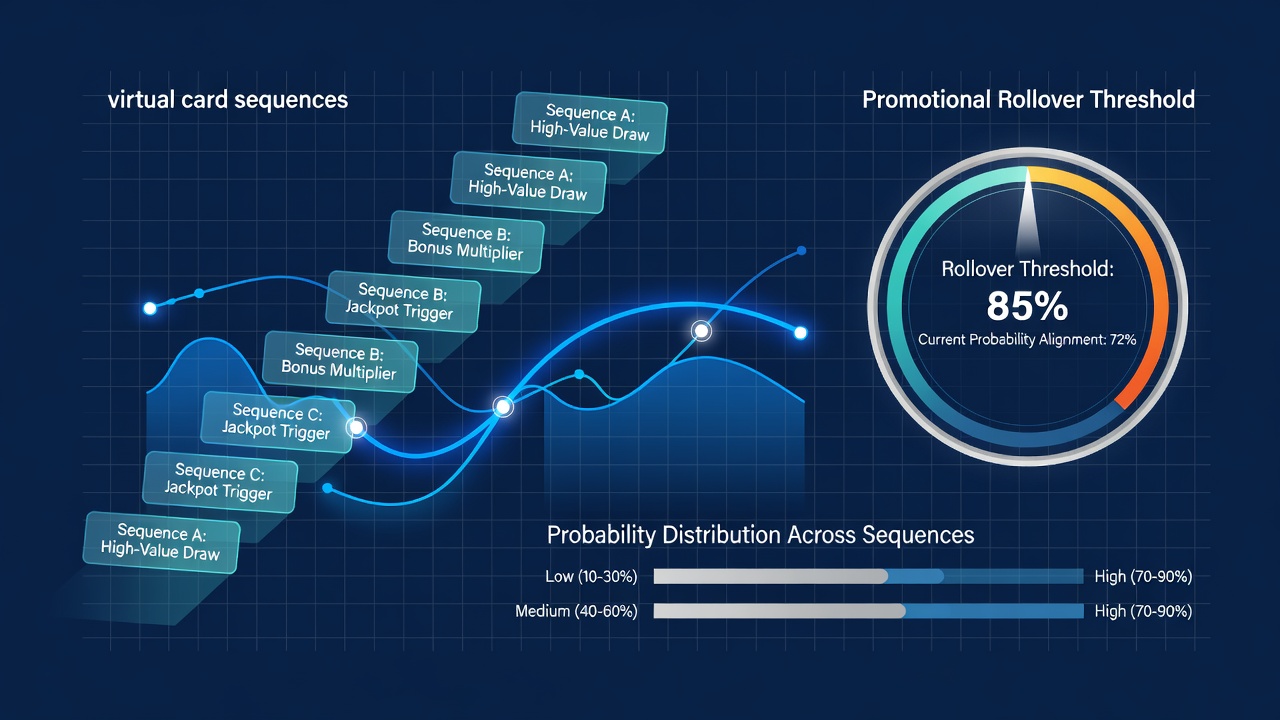
Probability intersections emerge when the expected value of a card sequence segment is measured against the remaining rollover balance, and mathematical models combine hypergeometric probabilities with linear contribution functions to forecast completion timelines. Experts who developed these models report that short-term deviations from expected distributions can either compress or extend the number of rounds needed, yet long-term averages converge toward predicted values because RNG certification ensures uniformity. In July 2026, updated reporting requirements across several regulatory regions prompted operators to publish anonymized completion statistics that revealed average fulfillment periods ranging from 180 to 420 hands depending on the specific threshold multiplier and game weighting applied.
Analysts apply Monte Carlo simulations to test thousands of sequence permutations against fixed rollover rules, and the outputs consistently show that variance spikes occur at the midpoint of most threshold ranges before stabilizing as players approach full clearance. Those studying the data note that players who align larger wagers with statistically favorable sequences achieve faster fulfillment in weighted table games, while misaligned timing extends exposure without accelerating progress. External reports from the National Council on Problem Gambling further illustrate how these intersections influence session duration across different player segments.
Regulatory Context and Data Trends in 2026
Regulatory frameworks in Britain require operators to maintain transparent records of how promotional mechanics interact with game outcomes, and July 2026 updates to reporting standards expanded the granularity of data submitted regarding sequence-based play patterns. International comparisons drawn from bodies such as the Ontario Lottery and Gaming Corporation demonstrate that similar transparency measures elsewhere have led to refined weighting tables that better align contribution rates with actual game volatility. Observers tracking these developments note that clearer disclosure of rollover intersections helps players understand the mathematical parameters governing bonus conversion without altering underlying RNG behavior.
Compliance audits conducted during this period examined whether promotional structures inadvertently created exploitable patterns, and the results indicated that properly weighted systems maintain house edges within certified limits even when players attempt to leverage sequence awareness. Data from multiple venues shows that completion rates remain stable across large player populations despite individual variance in card outcomes.
Conclusion
The mapping of virtual card sequence probabilities against promotional rollover thresholds continues to evolve as operators integrate new reporting requirements and researchers refine modeling techniques. Evidence gathered through certified RNG audits and compliance datasets provides a factual foundation for understanding how these elements intersect within regulated British digital venues, while international regulatory comparisons offer additional context for ongoing developments.