Correlations Between Loyalty Point Rates and Bet Adjustments in Multi-Variant Video Poker Environments
Drew Flores · Aug 3, 2026

Correlations Between Loyalty Point Rates and Bet Adjustments in Multi-Variant Video Poker Environments
Video poker lobbies in online platforms track loyalty point accumulation through fixed formulas tied directly to wager volumes across variants such as Jacks or Better, Deuces Wild, and Double Double Bonus Poker. Operators calculate points at rates that scale with bet sizes, where higher denominations or coin counts per hand generate proportionally more points per round. Research from industry reports shows these systems create measurable patterns when players shift bets between hands or switch game types mid-session.
Loyalty Mechanisms adn Accumulation Formulas
Points accrue based on theoretical win percentages and actual coin-in amounts, with many systems awarding one point for every ten dollars wagered on average. Multi-variant lobbies display real-time counters that update after each hand, allowing players to monitor progress toward tier thresholds. Data from platform analytics indicate that accumulation speeds increase when users maintain consistent high-coin bets on lower-variance games, whereas frequent switches to high-volatility variants often dilute overall rates because session lengths shorten.
Operators adjust point multipliers during promotional periods, and these changes alter the relationship between bet levels and reward speed. Studies compiled by gaming research centers reveal that point-earning efficiency peaks in lobbies where variants share unified tracking systems rather than isolated meters for each game type.
Bet Adjustment Patterns Observed Across Sessions
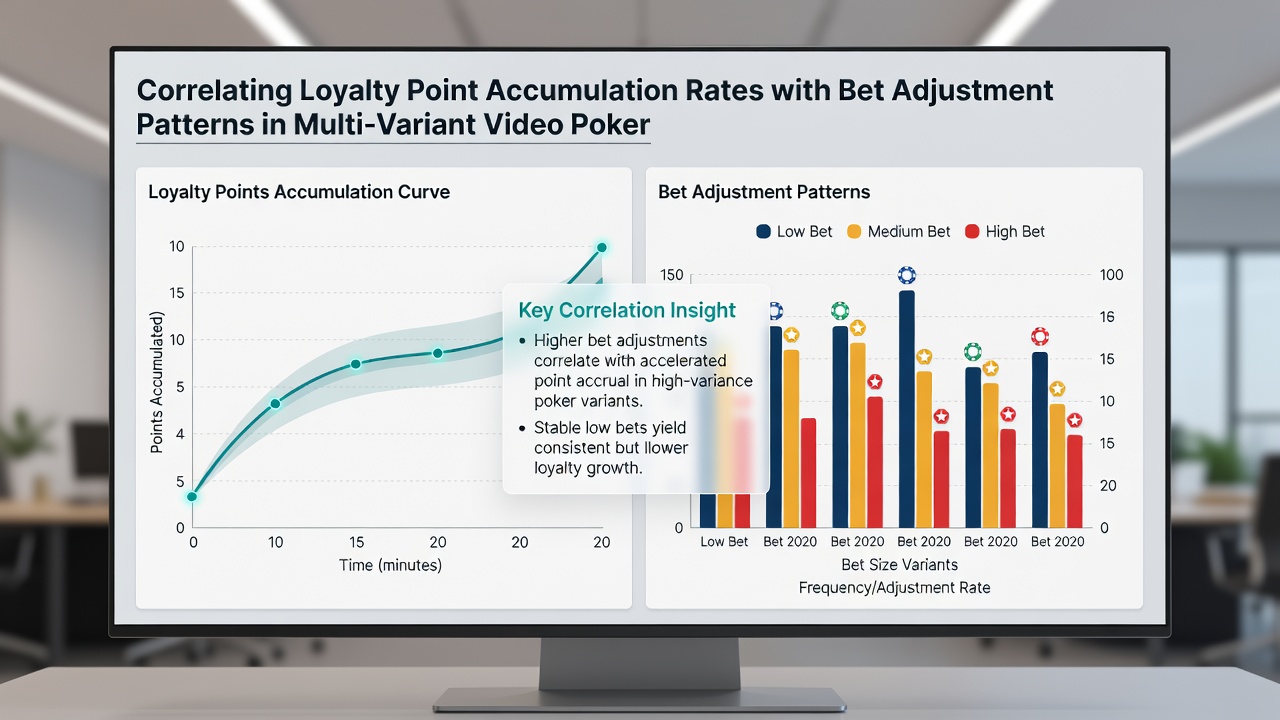
Players frequently raise or lower bets in response to recent outcomes, and these adjustments correlate with changes in point accumulation velocity. When bet sizes increase after wins, point totals rise faster because each hand contributes more to the underlying wager metric. Conversely, reductions following losses slow accumulation, even if the number of hands played remains constant. Observers note that multi-variant environments encourage such shifts because different games carry distinct paytable structures that reward specific bet denominations.
Analysis of session logs demonstrates recurring sequences where users begin at minimum bets to test variants, then scale upward once a preferred game stabilizes. This progression produces steeper point curves during the latter portions of sessions. Figures released in August 2026 from North American gaming oversight bodies confirm that average bet adjustments in video poker sections exceed those recorded in slot-only lobbies by measurable margins.
Statistical Relationships in Multi-Variant Data
Correlation coefficients between loyalty point rates and bet adjustment frequency reach moderate positive values when examined across large player cohorts. Higher adjustment activity associates with elevated point totals only when upward changes predominate, while frequent downward moves produce flatter accumulation lines. Academic papers on gambling behavior document these links through aggregated telemetry that captures hand-by-hand wager amounts alongside point increments.
Platform operators in regulated markets track these metrics to refine lobby layouts and bonus structures. Reports from the Nevada Gaming Control Board highlight that video poker sections generate distinct loyalty patterns compared with other table or machine categories, particularly when multiple variants operate under single player accounts. Canadian provincial data similarly shows that integrated tracking across game types increases overall point velocity when bet patterns remain stable for extended intervals.
Variant-Specific Influences on Point and Bet Dynamics
Each video poker variant carries its own optimal bet thresholds that influence how quickly points accumulate relative to risk exposure. Games with bonus rounds or progressive elements often prompt larger bet jumps, accelerating point gains during favorable streaks. Those who study session records find that players migrate between variants more readily when point displays update uniformly, reducing hesitation that might otherwise limit bet experimentation.
August 2026 platform updates introduced enhanced variant filters that display expected point rates alongside paytables, and early metrics suggest these tools have affected adjustment frequency in measurable ways. Loyalty systems that normalize points across variants encourage broader exploration without sacrificing accumulation speed, according to aggregated reports from regional gaming associations.
Conclusion
Evidence assembled from operational data and regulatory summaries establishes clear linkages between loyalty point accumulation rates and the timing plus direction of bet adjustments in multi-variant video poker lobbies. These connections appear consistently across different regulatory environments and continue to inform platform design choices as tracking technologies advance.