Charting the Evolution of Interactive Features in Browser-Based Card Game Interfaces
Leon Vogel · Jul 20, 2026
Charting the Evolution of Interactive Features in Browser-Based Card Game Interfaces
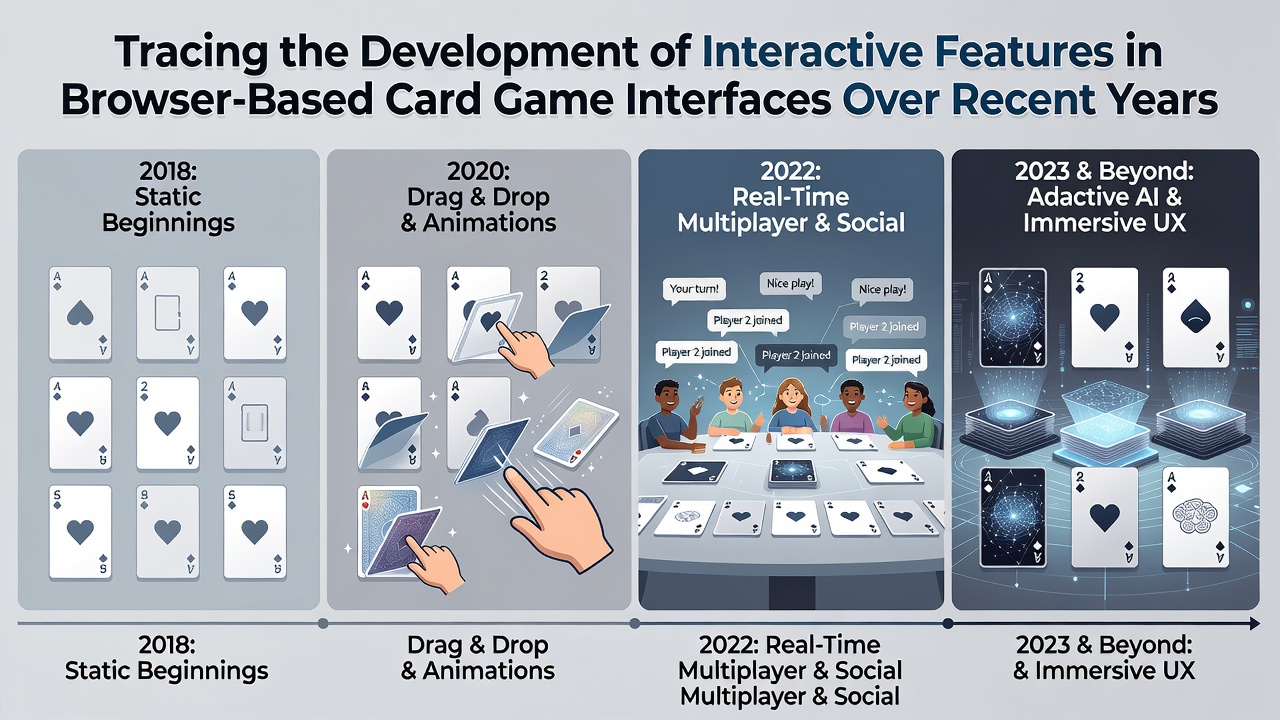
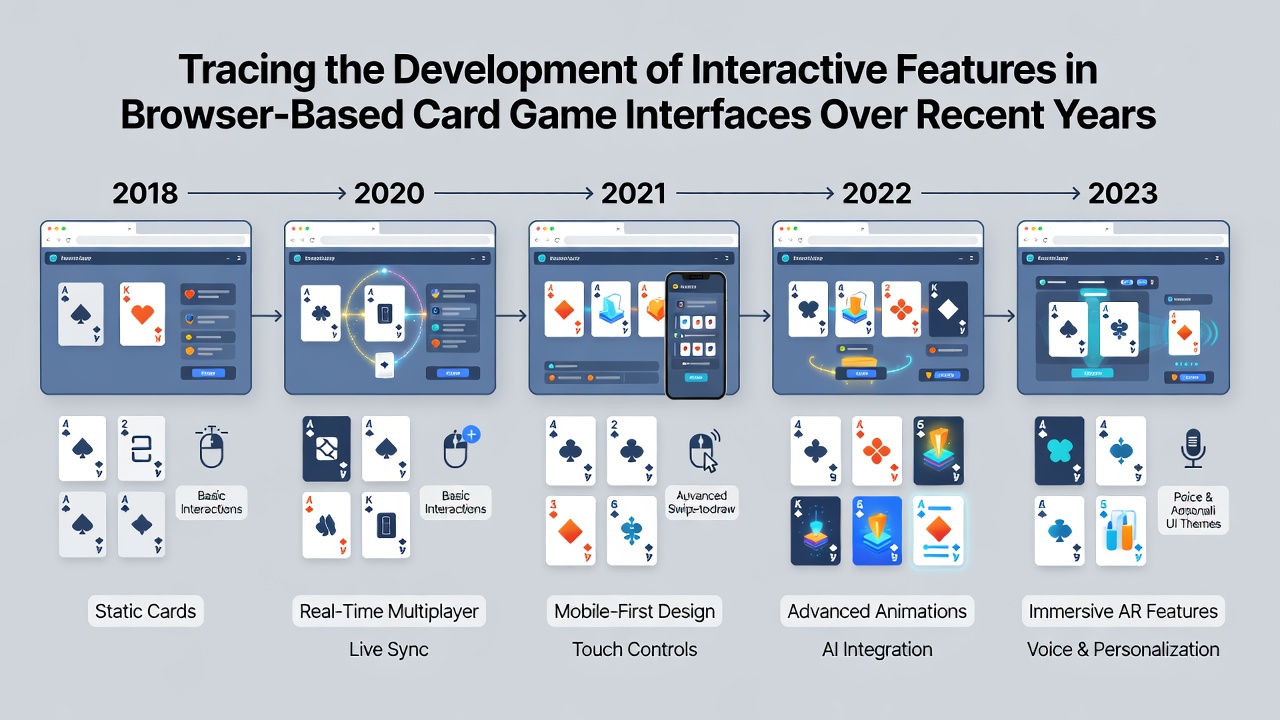
Browser-based card game interfaces have undergone steady refinement since the mid-2010s, with developers focusing on smoother input methods, responsive layouts, and real-time feedback systems that align with advances in web standards. Early versions relied primarily on static button clicks and basic JavaScript events, yet by 2018 many platforms incorporated drag-and-drop functionality for card movement that reduced the number of separate actions required from users.
Initial Shifts Toward Touch and Gesture Support
Developers began integrating touch gesture recognition around 2017 as mobile browser usage increased, and this allowed players to swipe cards across virtual tables without separate tap sequences. Research from human-computer interaction studies at institutions such as Carnegie Mellon University demonstrated that gesture-based controls lowered error rates in simulated card environments by measurable margins compared with earlier click-only systems. Animation libraries like GSAP and later Web Animations API further enabled fluid card flips and stacking sequences that responded instantly to user input without page reloads.
Multiplayer synchronization also advanced during this period through WebSocket implementations, which replaced older polling methods and delivered near-instant updates across connected browsers. Observers note that these changes coincided with wider adoption of HTML5 canvas elements for rendering card graphics, replacing slower image-swapping techniques that had previously caused visible delays on slower connections.
Expansion of Real-Time Feedback and Accessibility Tools
By 2020 several major platforms introduced dynamic highlighting that responded to rule-based logic, showing legal moves automatically as cards were selected. Data compiled in reports from the Interactive Games and Entertainment Association indicated rising usage of these visual cues across desktop and tablet sessions alike. Screen-reader compatibility received parallel attention, with ARIA attributes added to card elements so that state changes announced automatically to assistive technology users.
Particle effects and subtle sound layering entered many interfaces around the same time, triggered through the Web Audio API rather than external plugins. These additions remained optional, yet they provided additional confirmation layers when cards were played or discarded. Developers tested these features extensively across different browser engines to maintain consistency, and cross-platform testing frameworks became standard practice for teams releasing updates.
Integration of Adaptive Interfaces and AI Assistance
Adaptive layouts gained traction after 2022 as CSS Grid and Flexbox matured, allowing interfaces to rearrange card displays automatically when browser windows resized or devices rotated. A 2024 industry analysis from the North American Association of State and Provincial Lotteries highlighted that responsive designs correlated with longer average session durations across participating sites. Machine-learning models began assisting with opponent behavior prediction overlays in certain single-player modes, displaying probability indicators derived from historical play data without interrupting the main game loop.
Voice command integration emerged in experimental builds by early 2025, leveraging browser speech recognition APIs to let users speak card selections while maintaining full keyboard and mouse fallback options. Regulatory bodies outside the UK, including the Nevada Gaming Control Board, have tracked these accessibility expansions as part of broader digital compliance reviews. Performance metrics improved concurrently through WebAssembly modules that handled complex rule calculations locally, reducing server round-trips during fast-paced rounds.
Recent Refinements Observed in Mid-2026
Through the first half of 2026, several platforms introduced modular UI components that users could reposition within defined boundaries, reflecting ongoing work on customization standards. Browser support for the Gamepad API also expanded, enabling external controller mapping for card selection sequences in desktop environments. Studies published by academic groups at the University of Waterloo have examined how these layered input methods affect decision speed in timed card scenarios, noting measurable differences across age groups in controlled tests.
Security enhancements accompanied interface updates, with cryptographic verification of card shuffles now commonly executed client-side before server reconciliation. These steps address concerns raised in technical papers from cybersecurity conferences, while preserving the visual fluidity that players have come to expect in modern browser sessions.
Conclusion
The trajectory of browser-based card game interfaces shows consistent layering of new capabilities onto existing web technologies, from basic gesture support through adaptive layouts and emerging AI-assisted overlays. Continued alignment with evolving browser standards suggests further incremental gains in responsiveness and accessibility will appear in subsequent updates, driven by both technical feasibility and documented user interaction patterns across global markets.