Charting Slot Risk Profiles Against Wagering Demands in UK Live Dealer Settings
Henrik Schröder · Jun 15, 2026
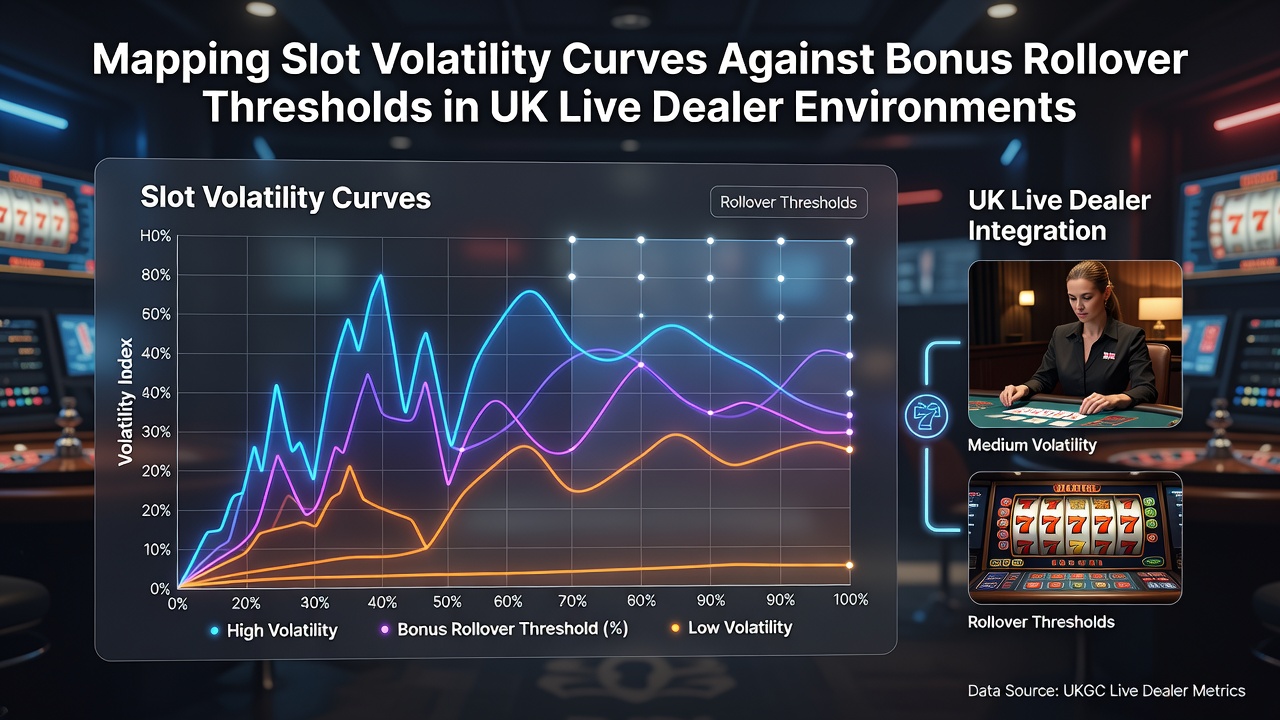
Charting Slot Risk Profiles Against Wagering Demands in UK Live Dealer Settings
Analysts in the gambling sector track how slot volatility patterns interact with bonus rollover thresholds, particularly where live dealer tables form part of the overall platform experience. Volatility curves describe the frequency and size of payouts across different slot titles, while rollover thresholds set the total wager amount needed before bonus funds convert to withdrawable cash. In UK environments operators integrate these elements so players move from slot play into live dealer sessions such as blackjack or roulette once initial wagering conditions are met.
Research from the University of Nevada Reno's gaming studies program shows that low-volatility slots produce steadier returns yet require longer sessions to satisfy higher rollovers, whereas high-volatility titles create sharper swings that can accelerate or derail progress toward those same thresholds. Data collected across multiple European markets indicates operators adjust bonus structures seasonally, with June 2026 marking a period when several platforms revised rollover multipliers to align with updated player protection metrics reported by the Malta Gaming Authority.
Defining Volatility Curves in Practical Terms
Volatility curves emerge when developers plot payout distribution against spin volume, creating visual models that reveal whether a slot leans toward frequent small wins or infrequent large ones. Observers note that medium-volatility slots often sit at the intersection where rollover completion happens most consistently because their return patterns avoid the extremes that either drain bankrolls too quickly or stretch sessions beyond typical bonus expiry windows. Those who've examined operator dashboards report that curves shift when games incorporate progressive elements or when live dealer feeds influence overall session length through table minimum adjustments.
Linking Curves to Rollover Thresholds
Bonus rollover thresholds typically range from twenty to fifty times the bonus amount, and each level interacts differently with volatility profiles. A thirty-times threshold paired with a high-volatility slot may complete faster during a single large payout run, while the same threshold attached to a low-volatility slot spreads the requirement across many smaller bets. Figures from the New Jersey Division of Gaming Enforcement reveal that platforms offering hybrid slot-to-live transitions see higher completion rates when volatility data informs the initial bonus selection prompts shown to users.

Live Dealer Integration Points
Live dealer environments add another variable because table games carry house edges distinct from slots, and many operators require a portion of rollover wagers to occur at these tables after initial slot play. Experts have observed that players who map volatility curves beforehand tend to select medium-volatility slots to build the required volume before shifting to live blackjack, where minimum bets align more closely with the remaining rollover balance. Reports compiled by the European Gaming and Betting Association highlight that such sequencing reduces the chance of exhausting bonus funds before live dealer sessions begin.
Data Patterns Observed in 2026
June 2026 brought fresh datasets showing that platforms with dynamic volatility displays achieved higher bonus conversion percentages than those without. These displays overlay curve information directly onto bonus terms, allowing users to see projected completion times based on chosen slot volatility. Industry analysts note that the adjustment coincided with broader platform updates that synchronized slot payout frequencies with live dealer table availability, creating smoother handoffs between game types.
Practical Mapping Approaches
Operators employ software tools that simulate thousands of spins across volatility categories against fixed rollover values, generating heat maps that flag optimal slot selections for each threshold. Players encounter simplified versions of these maps through in-game statistics panels that list average spins needed to clear common multipliers. Research indicates that when these panels include live dealer table minimums as an additional filter, the resulting recommendations steer users toward volatility bands that match both the rollover size and the expected duration of a table session.
Conclusion
Mapping slot volatility curves against bonus rollover thresholds supplies operators and analysts with measurable ways to align game design, bonus parameters, and live dealer transitions. The patterns documented through regulatory reports and academic studies demonstrate consistent relationships between volatility levels and completion efficiency, relationships that continue to evolve with platform updates scheduled for mid-2026 and beyond.